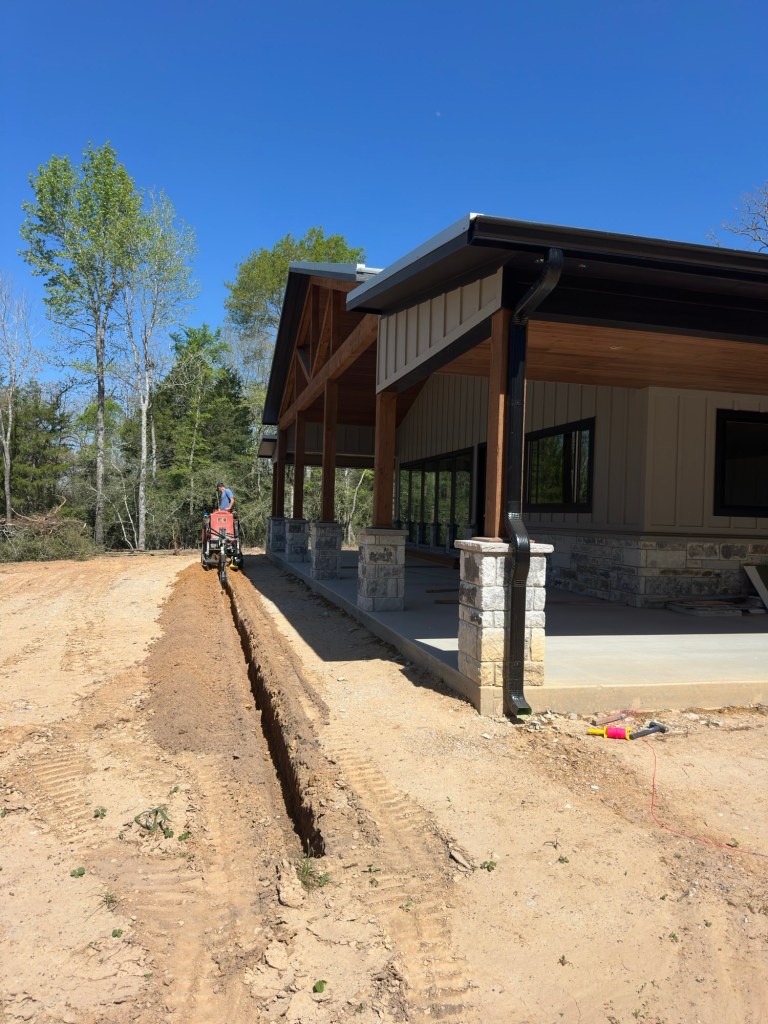
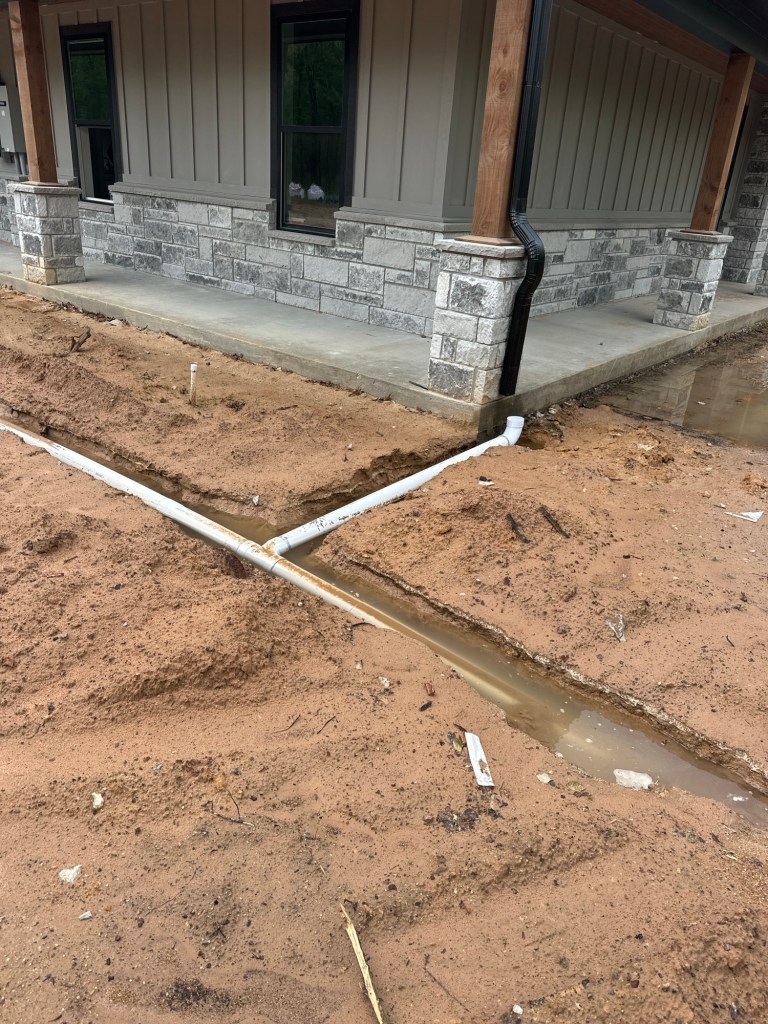
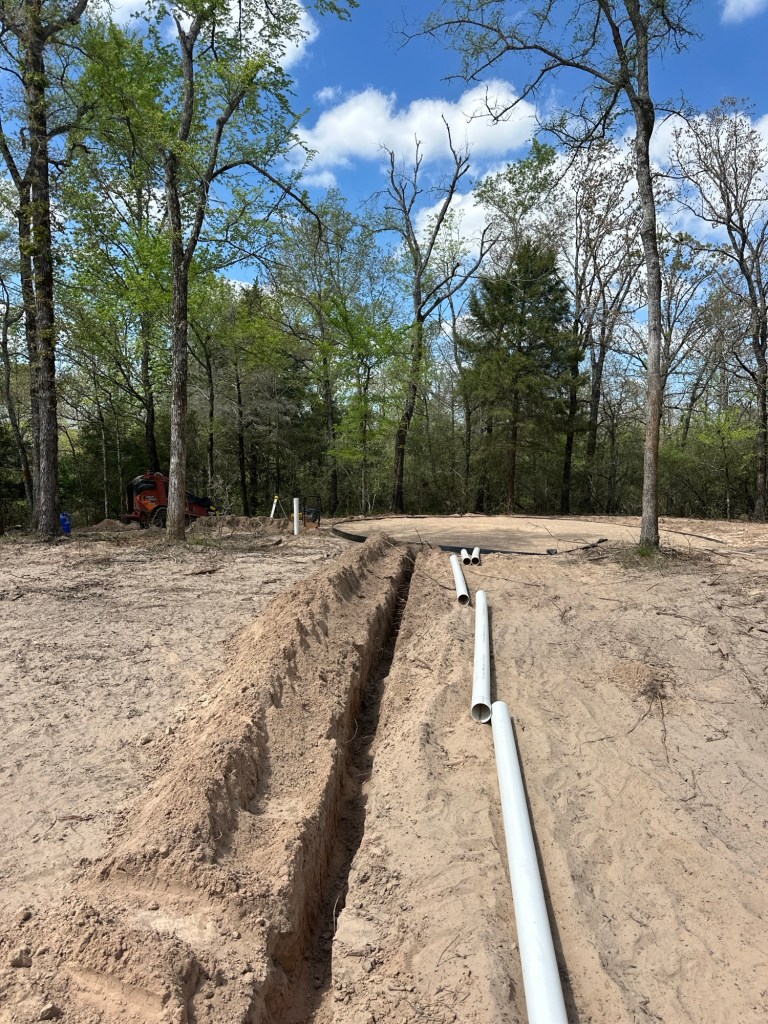
One of the sub-projects I am undertaking while building the wranch house is the installation of a rainwater recovery system. This consists of collecting the rainwater which falls on the roof into a conventional gutter, directing it down a slightly unconventional downspout and into an underground conveyance line to a thirty thousand gallon holding tank. The other half of this system is to pump the water through a filtration and UV treatment package back to the house.
Austin and San Antonio, which lay to the west of Buffalo, Texas, draw much of their water from the Edward’s aquifer. Dallas, to my north, uses surface water for its municipal supply, although it sits over the Trinity aquifer. My well is drilled into the extensive Carizzo-Wilcox aquifer. Houston’s municipal supply is a mix of surface and subsurface water, shifting towards more surface water to combat land subsidence.
Austin and San Antonio are experiencing a critical hydrological crisis, denominated a D3 to D4 level (extreme to exceptional, respectively). The area around Buffalo is experiencing a D2, or severe level drought.
Although the aquifer I pull from is extensive and the water from my well has excellent characteristics and properties, I thought it would be prudent to collect rainwater for our household water requirements.
My water system is designed to switch between well water and rainwater, and I will be able to top off the rainwater tank with well water if desired. However, I will not be filling the aquifer with my rainwater unless we hit D10! The gutter is fitted with a leaf catcher. The downspouts must be water-tight because they will always be full of water to about 1 foot below the gutter which is the height of the water inlet on the tank (u-tube effect). The downspouts and the underground conveyance will be made of PVC suitable for potable water and will flow into the water tank after passing through a strainer.
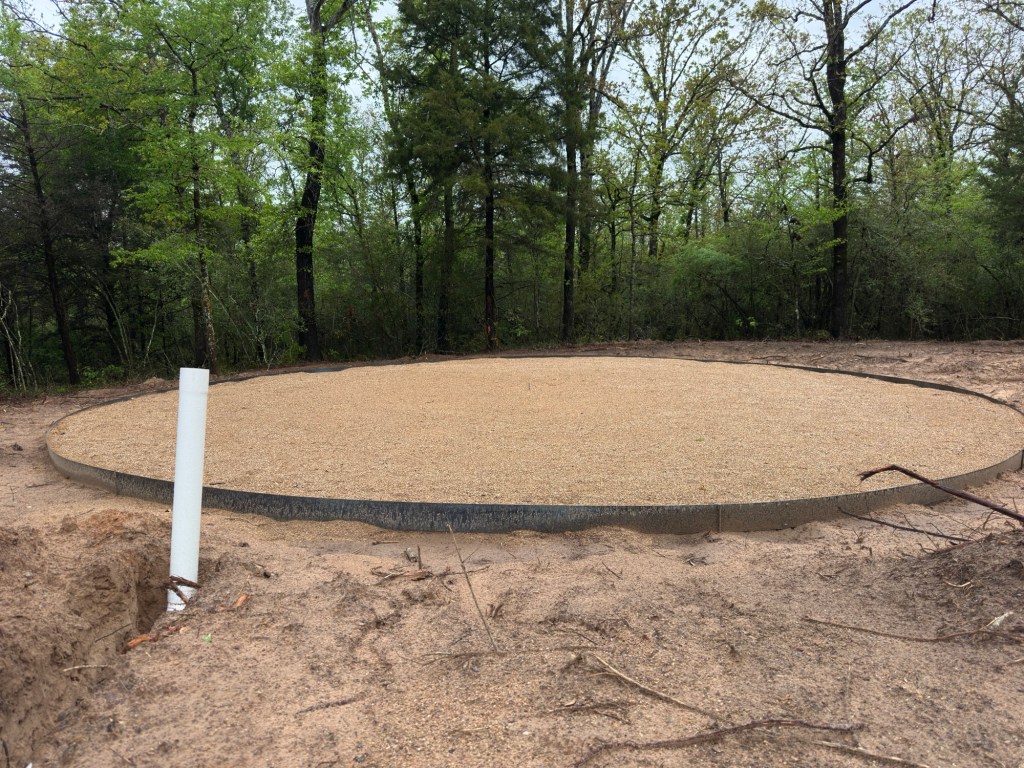
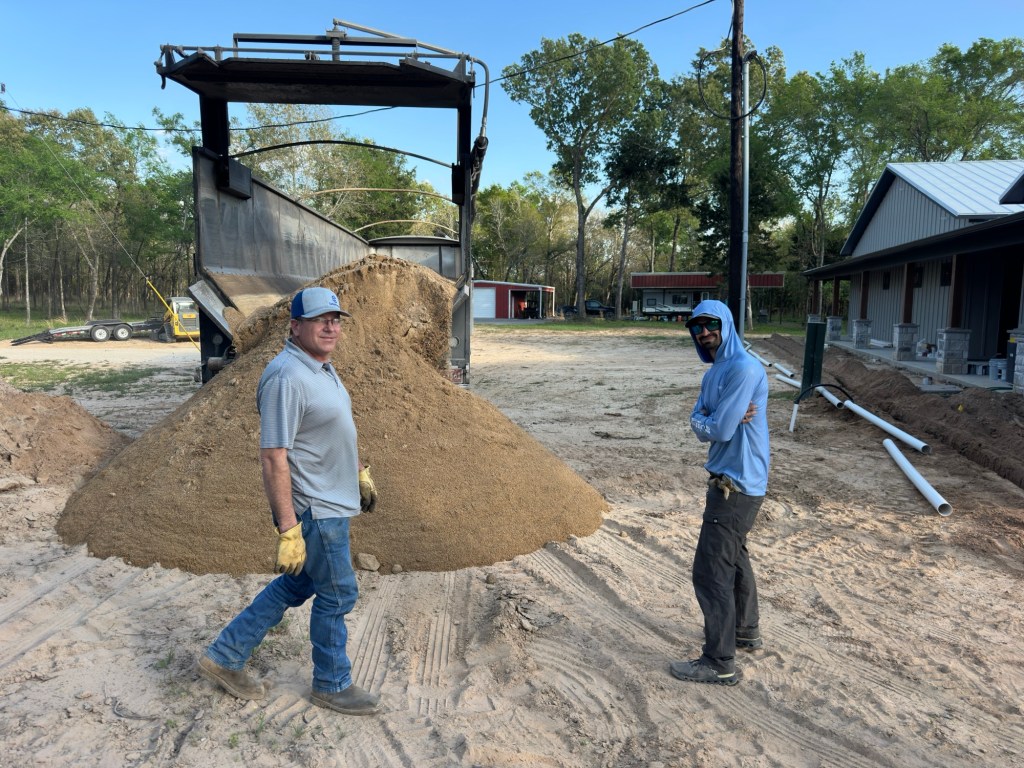
The tank is supposed to arrive and be erected tomorrow. The sides of the tank, which is about 26 feet in diameter and about 8 feet high, is basically a frame for the BPA-free TPU (thermoplastic polyurethane) bladder which will be attached to and supported by the metal tank.
It is getting late faster than I thought and it is already past my bedtime! I am excited about seeing the tank go up tomorrow!
 JP Ranch